
10 Trusted ISO Audit Firms in Singapore for Excellent Implementation of ISO Standards
Getting an ISO audit is an important step in advancing and adding credibility to any business. It provides an opportunity for the business to check its internal controls, identify problem areas within the company, and gather information that could help improve the company work processes and environment.
When you have committed to having an ISO audit, make sure that you are familiar with its guidelines and prepare accordingly. Working with a certified and experienced ISO audit firm guarantees that the audit will be conducted with minimal disruptions and that you will receive the most value from the process.
Check out Becozon’s top auditing companies to find an ISO audit service agency to help your company meet ISO standards and improve your business operations and reputation.


How to Choose ISO Audit Services that Ensures International Recognition
There are various methods and tactics you can use to grow your business and attract new customers. ISO Certificate registration is one of the simplest, safest, and most effective.
The International Organization for Standardization (ISO) is an independent body that establishes standards for organisations to follow. Businesses use the ISO standards to demonstrate their ability to provide services and goods that meet regulatory and consumer requirements. For example, ISO 9001 certification denotes high-quality goods and services. If you're stumped by competition, an ISO certification helps you sustain, nurture, and build market trust.
The ISO certificate improves your company's credibility, authority, and overall efficiency. Moreover, being ISO Certified shows that your company is capable of exceeding its customers' expectations.
Hence, ISO certification is an important factor influencing a product's perceived quality and a consumer's positive attitude, brand preference, and purchase intention. When your company is ISO certified, you could charge a better price for your product or service and expect higher revenue.

What is an ISO audit?
An ISO audit determines whether a company's management systems comply with ISO standards. They also identify both existing and potential errors in the company’s management systems and recommend solutions to correct or avoid these issues. In addition, an audit also assists in determining what actions have been taken to meet organisational goals and objectives, as well as look for ways to improve the system.
It is critical for any company that wants to ensure that they are doing things as efficiently as possible, as well as a way to practice due diligence that all of the company's processes comply with the relevant regulations.
An ISO audit is a great way to improve your business's performance. It provides you with the knowledge you need to operate more efficiently. It also allows your company to distinguish itself from the competition by demonstrating a commitment to quality assurance and customer safety and satisfaction.

The Purpose of an ISO audit
The purpose of an ISO audit is to verify that the company has implemented a quality system that meets the requirements and standards set by the Organisation for the business’s specific industry. The audit is conducted by a third-party auditor who will inspect the various processes and operations involved in your company’s production or service provision. The auditor then submits a report of his findings, including recommendations for improvement. If your company meets the ISO standards, the auditor will also issue an ISO certification.
The auditor will identify gaps in the organisation's management system and the standard's requirements and make recommendations on how to close any gaps. They will also examine whether your company has procedures to manage change, how well you communicate with customers and partners, and whether you use best practices when hiring and dismissing employees.
An ISO audit pushes you to examining your company’s procedures, systems, processes and employees in forensic detail to ensure they meet the prescribed ISO standards. This comprehensive examination of your company’s internal processes facilitates in recognising points of failure and potential issues, as well as allows you to find growth opportunities and areas where your business can improve.
The entire process inevitably results in better operational planning, enhanced performance and improved decision-making. It often also results in better relationships with your employees, suppliers and customers. Hence, if you're looking for a way to enhance the efficiency of your company, an ISO audit helps.
Benefits of an ISO Audit
Obtaining an ISO certification benefits both the organisation and the customers. It is relevant for any organisation, regardless of size or industry. Here are the benefits of an ISO audit that your company will reap when implementing the ISO standard and maintaining an effective quality management system.
- Gives greater insight into the business
Conducting an ISO audit involves the monitoring, measurement, analysis, and evaluation of all your processes, people, systems, and procedures. This level of scrutiny provides you with greater insight and control over your company's performance and direction, allowing you to make better, more informed decisions.
- Boost marketing and sales efforts
Passing an ISO audit and thus achieving ISO certification informs potential customers that the world's highest standards-body has independently verified your products and organisation. It shows your credibility and gives your sales team confidence in the product or service they're selling.
- Improve employee performance
Having well-defined job descriptions, expectations, and objectives gives employees the confidence to perform their duties to the best of their abilities. An organisation will benefit from improved company culture, teamwork, and a more competent workforce.
- Improve customer satisfaction
Customers expect a high level of quality from you, which means fewer complaints and faster and more effective resolution of those that do come in. This leads to increased sales and repeats business. Additionally, maintaining quality in your organisation reduces the possibility of mistakes that could harm your reputation.
Therefore, the benefits of an ISO audit make it a valuable tool for any organisation looking to improve its quality management systems. ISO certification is also a great way to boost sales, improve performance, and seize opportunities.

What to Expect During an ISO Audit
An ISO audit process generally has three phases: an opening meeting, an audit of the company's operations and quality management system, and a closing meeting.
During the opening meeting, the management team and the auditor will set their audit criteria and draft an audit programme. These are meant to establish the company's objectives for conducting the audit and its intended effects on its operations. The auditor will discuss his role during this meeting, as well as the intended audit schedule. Depending on the size of the operation, the auditing process could take up to a week.
Following the opening meeting, the audit of the company's operations and quality management system will begin. The audit schedule will be used to guide the audit of your operations and processes.
The auditor will visit various departments to determine whether the ISO 9001 requirements noted in your documentation have been implemented and are being followed by staff. The auditor will conduct interviews with employees, asking questions and taking notes on what they learn; depending on the findings, auditors could make a note for further evaluation.
This is when the majority of the auditing will occur. During this step, you and your team will gain insight into what you are doing well and what could use improvement for better compliance. At this stage, you will also be required to show that your current system is functionally operating for a reasonable period of time. This is typically done by letting the auditor view the day-to-day work processes within the company. The auditor may also perform a quality system audit, which checks the different aspects of how your company’s quality system is used to produce your products.
Finally, at the closing meeting, the auditor reviews the entire audit and makes a recommendation based on the findings. This meeting is for department management to review the audit report and responses, ask questions, and get clarification. Results of other procedures not in the final report will be shared at this meeting.
The final audit report, with management responses, is then delivered to the CEO, the board of members, company secretary, and department employees who were involved in the audit. It may also be send to the company's head accountants following the closing meeting. A certificate is issued if the company meets ISO standards.
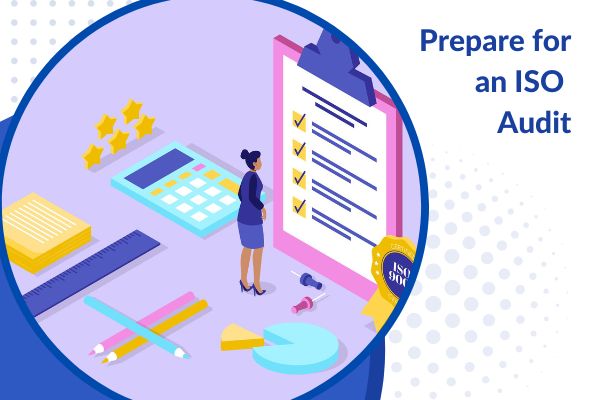
Preparing for an ISO Audit
The best way to prepare for an ISO audit is to ensure that your quality management system is up to date and compliant with relevant ISO standards. It also requires a company to identify and manage the statutory and regulatory requirements that apply to its products and services. It means having all the necessary documentation in place and ensuring that your processes are aligned with the standard's requirements.
It is also important to have a good understanding of the auditor's expectations and requirements. This could be accomplished by requesting a copy of the audit checklist ahead of time and ensuring that you have all relevant documentation ready to present to the auditor. The ISO audit checklist is created as part of the internal audit programme for the auditor to refer to when checking the essential clauses.
It also guarantees that you understand how the ISO audit will fit into your company environment and business goals. The audit checklist examines every component of the particular ISO standard that you wish to comply and determines whether you already meet these requirements or still has to make some modifications in your processes, systems or products.
Finally, it is helpful to appoint someone within your organisation who will be responsible for coordinating the entire audit process. Preparing all relevant documents in advance will reduce the time necessary to perform the audit and assist your auditor in streamlining their work, allowing them to make their review and provide feedback with minimal disruptions.
Guidelines for an ISO Audit
Organisations that obtain ISO certification gain a competitive advantage that allows them to win the business of companies that require it from their vendors. To ensure that ISO requirements compliance is worthwhile, we should learn which industries require ISO certification.
For example, healthcare organisations achieve ISO compliance by stating their dedication to quality and providing patient-centred care. ISO standards provide guidelines for establishing an organization’s quality management system that improves the efficiency of clinical, support, and business processes. All healthcare procedures are thoroughly documented and standardised. As a result, the healthcare organisation provides better care and identifies and manages risks to staff and patients more effectively.
Engineering firms are another example, as they also operate in a complex regulatory landscape and must maintain the highest level of accuracy in their work. Compliance with ISO standards enables them to address both of these challenges concurrently. Quality assurance is critical for engineering firms because it shows an ability to recognise potential hazards and inefficiencies and establish plans to mitigate these risks. These kinds of assurances help you stand out in a crowded marketplace.
Comprehensive documentation, standard operating procedures, and disaster recovery plans are all required by ISO. Modern businesses rely on technology and the data stored therein. You could lose data by accident, face data breaches, or be affected by natural disasters. In such cases, a quality management system backed up by documentation could greatly help in data recovery and get your business back on track. Observing ISO guidelines helps guarantee that you have secure information security management systems.
Hence, certification is critical for manufacturers and service providers because it emphasises performance excellence while demonstrating a commitment to quality and to the customers. In any industry, a comprehensive management system must be tailored to specific operational environments, with the aim to improve core business functions.

ISO Audit and Other Regulatory Audits
An ISO audit is a key element of a quality management system. The type of audit you choose will be determined by your compliance and certification goals, as well as your scope, scale, and budget. There are four types of ISO audits:
Internal Audit
An internal audit, also known as a first-party audit, is typically performed inside a company to measure the strengths and weaknesses relative to its internal business objectives. It is a conformity assessment meant to check compliance gaps and prepare an organisation for an ISO certification audit. Typically, the auditors performing the first-party audit will be enterprise employees; however, they should not have a vested interest in the audit results.
During this time, the auditors performs a gap analysis, which is the start of the certification process and meant evaluate what exists now against the set of criteria for which each standard is intended. Sometimes referred to as a pre-audit, gap analysis typically also involves creating audit checklists, another tool for comparing a company's practices and procedures to ISO requirements. Audit checklists should include all of the items necessary to execute an internal assessment correctly and swiftly.
External Audit
An external audit, also called a second-party audit, is usually done on a supplier of products or services at the request of a customer, or a company contracted to act on the customer's behalf. The second-party audit ensures that the supplier is carrying out its obligations under the contractual agreements in place. A certified auditor from an outsourced or external auditing firm should perform the second-party audit.
Certification Audit
A certification audit is also known as a third-party audit. When an organisation seeks ISO certification, it typically undergoes a third-party audit. A certification body auditor determines whether an enterprise complies with the relevant ISO standard during the certification audit. If this is the case, the certification body auditor will issue the certification.
Surveillance Audit
Surveillance Audits protect your organization by regularly testing to see that your company still meets your prescribed ISO standards. After achieving certification, your company need to conduct annual surveillance audits with your chosen certification body. Surveillance audits covers reviews of the management, steps taken by your organisation to correct or mitigate noncomformities, and an assessment of how your company has responded to the prior audit recommendations.
The road to ISO certification might appear long and challenging, but the payoff is well worth it. It makes good business sense to ensure that your organisation has rules and processes in place to ensure that you produce exactly what you say you will. Your organisation will reap the benefits of certification once you have created momentum and movement toward quality first.
How to Select an ISO Auditing Company
Selecting an ISO auditing company in Singapore is challenging, especially if you're unsure what to look for. Here are a few tips to help you choose the right company for your needs:
- Check that the company has done similar audits
It will ensure that they understand your business and provide the most accurate assessment. It is also critical to select a company with the necessary skills and experience, as well as a process and attitude that will allow them to work seamlessly with company management.
- Choose a company recognized by the Singapore Accreditation Council
The SAC is Singapore’s national accreditation body, promoting trust in the country’s products and services by maintaining the integrity of conformity assessment practices. The Council also strengthens businesses’ technical infrastructure for conformity assessments, making it easier for businesses to operate internationally. A company recognized by the SAC, therefore, is guaranteed to follow proper guidelines and procedures.
- Get feedback from previous clients
It will give you an idea of their level of service and professionalism. You could also ask them if any issues came up during the audit that they were unaware of or if any problems with their findings were unable to resolve. Did they experience any problems during the audit? How did it affect their business operations, reports and sales? Did the auditors display apt competency in their roles?
- Compare quotations from different companies
It will help you compare rates and ensure you get the best value for your money. You should also ensure that you are comparing similar items, such as determining whether travel expenses or documentation review are included.
Following these tips will ensure you find the right ISO auditing company in Singapore for your needs. With their help, you could comply with ISO standards and improve your overall business operations.
An ISO audit evaluates an organization's compliance with the ISO international standards, looking at a company's quality and risk management systems, as well as its overall business practices, in order to determine its efficiency. It suggests ways to improve them, making it one of the best options available to any organisation seeking to ensure that its quality management system operates as efficiently as possible.
When a company is ISO certified, it gains repeat business from loyal customers, improved advertising, a competitive advantage, improved operational performance, and a significant market share.
To learn more, view our ISO auditing companies in Singapore that helps increases efficiency and profit for your business.
Latest Becozon Offer
Boost your business with these exclusive deals by our esteemed Becozon partners

Here's How Companies Adopt
Hybrid Work Post-COVID
Looking for a CRM software?
Get customisable, cloud-based sales and operations CRM software suitable for any industry. Contact us for a demo today!
Contact Us