
10 Best Office Interior Design Firms in Singapore Creating Spaces Conducive for Work That Employees Would Love
Your office interior design has a huge impact on your employees’ comfort, morale and productivity. A good office interior design could enhance their creativity and output, improve how they feel about their work and the company as a whole, and could even help you attract new talent to your company. However, figuring out what makes a good office interior design is challenging.
A well-designed office space will help your business thrive. By understanding the principles of good office interior design, you will be able to create a comfortable and efficient workplace for your team. Additionally, by incorporating the latest trends using ergonomic furniture in the design of your office, your workplace can be a place where you don’t simply work, but where passion meets purpose.
If you’re looking for a trusted interior design firm, check out our list of the top office interior companies in Singapore that can help you create more pleasing work spaces, improve your company culture, and promote your values.


How to Select the Best Office Interior Designer To Create a Functional and Beautiful Office That Employees and Customers Will Love
Having an environment that is conducive to working is an essential factor of productivity that many business owners overlook. In fact, studies have shown that good aesthetics and ergonomic design in workspaces have a highly positive impact on staff performance. Furthermore, good design not only stimulates employees but also improves morale, company image, and their impression of their work.
On a daily basis, office interior design influences people's moods and energy, both consciously and subconsciously. Office interiors have the ability to significantly influence the emotions of owners, employees, and customers. Therefore, its design is one of a business's most critical decisions when developing an identity and a healthy workplace.
Below is a breakdown of the tenets of good office interior design and how any business should apply them.

Office Interior Design 101
Design is the science or process of observing particular rules to achieve a balanced and favourable effect. These rules may be based on aesthetics, function or both. It is the result of combining elements to create a visual composition that communicates an idea or feeling. Interior design has seven primary elements:
Space
Space is the foundation that governs the entire design scheme. It comprises the physical boundaries on which people work to achieve a particular function. It refers to a room's two-dimensional floor space along with its three-dimensional volume. You have walls, floors, and ceilings as boundaries, and you consider not only the length and width of the space but also its height.
Another aspect of space is the idea of positive and negative space. A positive space is defined as a space that contains furniture or decor items. Anything else is referred to as negative space. This must be balanced, so your room does not appear crowded or empty.
Line
Line refers to the guides in the shape of the room that is used to evoke feelings of harmony, contrast, and efficiency. It is classified into three types: vertical, horizontal and dynamic. Interior designers use lines to give a space better definition.
Horizontal lines are used to create a wider and longer appearance. Tables, chairs, and couches are found on the horizontal line. Meanwhile, vertical line creates the illusion of height, making a room look taller. Vertical lines are formed by features such as doorways and windows. Lastly, diagonal, zigzag, and curved lines are called dynamic lines. Typically employed in staircases and wall designs, these lines are used to add a dramatic effect or create interest.
Form
Form means the shape of the room itself and the items within it that have the ability to create proportion. Forms are typically classified as either geometric or natural. Geometric pertains to square edges and hard lines that come about by human design, whereas natural refers to more organic forms that have been created through a natural process. Forms could also be opened or closed.
Another aspect of form to consider is the proportion and scale of the room in relation to the objects placed within it. The addition of forms of similar shapes could create harmony and balance, whereas the addition of too many different shapes could be confusing. Space is more appealing when the dominant form is repeated in minor objects throughout the space.
Light
Light emphasises space, lines, and forms. Whether natural light or light from fixtures, it ensures that the room is functional. Light is designed to create a mood and even an effect of additional space.
When thinking about lighting, consider the activities that will take place in the space. Here, both quality and quantity should be evaluated. Natural lighting should always be considered, usually the preferred choice. Natural light can be manipulated by strategically placing doors, windows, and even mirrors.
Colour
Colour affects the mood and the perception of the occupants of the space. The psychological and physical response to colour affects everything in that space.
Consider what the room will be utilised for and the activities that will take place in that space before deciding on a colour. Second, as light could alter our perception of colour, consider how natural and artificial lighting will impact your chosen colour during both day and night. Finally, think about the size of the room. Interior designers frequently use lighter or brighter colours in small spaces to create the illusion of a larger space. Darker colours, meanwhile, can be used to add dimension.
Texture
Textures are classified as either physical or visual. Physical texture includes tactility, which means that when you touch something, you get a sense of how it feels, whether rough or smooth, cold or warm and so on. It is about surface variations and feels. Meanwhile, the visual texture is the illusion of a surface's textures. Texture creates depth and other effects when combined with the other elements.
A good interior designer can use texture to add “character” to an otherwise dull room. Any item or feature of a room can have texture – from its walls to its furniture to its décor – and, as such, should be managed with care from the start. The positioning of each object in relation to the texture of the object next to it would also add emphasis and contrast to the final design.
Pattern
Pattern modifies the style and apparent size of the room depending on how the lines within the space are used. A pattern is made by repeating a design and is found in wallpaper, soft furnishings, fabrics, and rugs. Stripes, geometric, organic, and motif patterns are just a few examples.
Patterns convey a story, add interest, and bring interior design to life. It also provides continuity and a smooth transition in a living area. They allow you to add energy, interest, and contrast to your layout. A lovely pattern design has the potential to tie a room together and add depth to your space.
Integrating Design and Functionality
Oftentimes, interior designers are called in to work on an already built room or a fixed space. This imposes physical limitations that the designers have to work within and still deliver an appealing design. Because of this, the work that has to be done within the space must consider factors such as the life cycle of the building and the available options for redesign and renovation.
Interior designers are aware of how their designs will fit into an existing space and what types of materials are available for use in creating them. They also know what can be done with certain features to make them more functional.
Your choice of furniture is a major aspect in your office design. It may be utilized to increase the usefulness and comfort of a space while also creating a unique aesthetic. While some consider office furniture as simply a backdrop in design, the items that employees use daily are very important as these has a huge impact on their mental and physical conditions while at work. Furniture must be selected for functional reasons, not only because space needs to be filled.
Office furniture is a tool that allows your valued employees to work comfortably and efficiently. Office furniture should be chosen with the same care that computers, electronics, and even the location of your business are. Your efforts will either result in a space where your employees are comfortable and engaged in their duties or an uncomfortable and distracting environment.

Components of Office Interior Design
Design choices affect productivity. Every element within the workspace must work together to create visual coherence, but the most important aspect should be the foundation for productivity. The space should not only be aesthetically pleasing to visitors – more importantly, it should be pleasing to your employees. Studies show that the correct combination of lighting, adequate ventilation, visual stimuli, and comfortable furniture all increase satisfaction and morale among workers; hence they develop an increased drive to perform well.
Flooring and Carpet Types
Many offices use carpet or tiles for the flooring, but other options might work better for tasks in a given space. Each option has unique advantages: carpets are excellent for sound absorption, ceramic tiles create a cleaner environment, while vinyl and laminates are affordable (which makes them a great choice for large areas). Other options are stone tiles (which are highly durable and produce a corporate atmosphere), concrete flooring (great for being flood- and fire-resistant), and timber floors (sturdy and create a classy impression.
Lighting and How It Affects Design
Studies on how light distribution affects health and worker satisfaction consistently report that areas with sufficient brightness produce high productivity levels. Additionally, it’s shown that distractions such as glares and flickering lights lower employees’ ability to concentrate and even their desire to work. Remember that poor lighting also leads to eye strain, headache, and back and neck pain.
Wall Colour
It has long been established that colour impacts productivity. High-wavelength colours inspire intense and passionate feelings, which is why red is often used to catch attention. Meanwhile, mellow colours like yellow inspire optimism and creativity, while low-wavelength colours like blue and green promote relaxation and focus.
Shelving and Storage Considerations
Storage in workspaces should not only be adequate but also strategically placed so as not to interfere with movement. They are able to segregate spaces such as walkways and gathering areas. There must also be a clear system for filing paperwork, documents, and mail, as well as other materials such as electronic equipment and small furniture. Items could be classified based on their function, similarities, frequency of use, and even how easily they can be cleaned. Do not forget to label each and make a list of references.
Desk and Chair Options
The desk area is the primary focus of office ergonomics; hence you cannot just pick a style that looks cool without considering if it works with the setup and is comfortable for its users. Ideally, the desk should make it easy for the wrists to lie flat on the desk when using a computer. An ideal chair should be based on the desk height so that the arms and thighs are parallel to the feet on the floor.
Position Plans
Office furniture must encourage correct posture to keep users comfortable and to avoid strains. When using an adjustable desk and chair, keep the knees lower than the hips, and the feet flat on the floor. The elbows should be at the side of the body, creating an L-shape. The monitor must be at eye level to avoid neck strain, while the keyboard is positioned about 6 inches from the front of the desk.
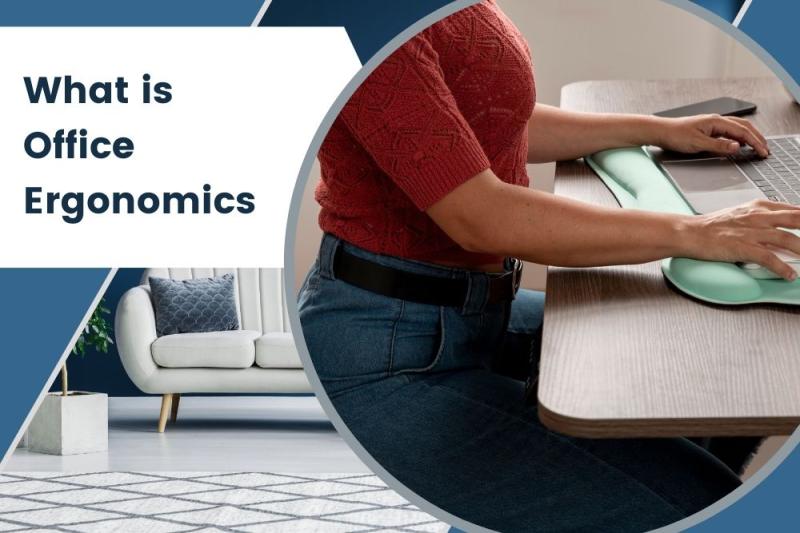
What is Office Ergonomics?
Ergonomics is the scientific discipline that studies how the elements of a system impact people. Its goal is to enhance performance using data gathered based on design, biomechanics, engineering, and psychology.
Ergonomics refers to the process of ensuring that a product, its purpose, and the person using it are all perfectly aligned. Ergonomics in the workplace refers to items such as chairs, desks, lighting, and other components of an employee's workstation. Office ergonomics focuses on the employee, minimizing injuries or health complications from occurring as a result of their work.
Ergonomics analyses the job, what kind of environment it is in, and what tools are needed to complete the job. With emphasis on functionality and comfort, items are designed specifically to fit the employees’ needs.
It is not just increasing productivity that is considered in ergonomics but the avoidance of work-related injuries as well. The stress resulting from poor working conditions leads to more absences, injuries that need compensation, and reduced business efficiency. Hence, ergonomics provides the tools needed to ensure that an individual's body parts are not under undue strain. With rising rates of injury and illness caused by poor office design, the cost to the company could quickly mount.
Risk Factors for Worker Injury
Ergonomic risk factors are job conditions that increase the likelihood of developing work-related musculoskeletal disorders (MSDs). It involves muscle, nerve, tendon, ligament, joint, cartilage, and spinal disk damage. Forceful exertions, awkward postures, and repetitive motions are the most common ergonomic risk factors for MSDs. It often leads to more employee absences, impacting the company's workflow.
Moreover, picking the wrong items in a workspace could cause physical problems like back pain and eye strain. Besides desk and chair designs, other elements employers often overlook are the size and positioning of keyboards and microphones, placement of monitor screens at the appropriate height, and using in-ear headphones (which are better than over-ear types).
Thus, when designing a new office environment, it is important to consider the health and safety of your employees. Ergonomic risk factors could be minimised by choosing an ergonomically sound office design.

Types of Workspaces
There are various types of workspaces for different purposes. Your work environment is determined by your job function, the company culture, what projects you are working on, and how your employees collaborate. Each space is designed for comfort, productivity, creativity, and morale. Ergonomics is utilised to make the best use of different types of workspaces, such as the following:
Loner Desks
Loner desks are dedicated workstations for individual employees, and are designed to limit distractions and encourages them to concentrate on their tasks. It is less common in organisations with more remote employees, but some could offer employees the option to choose whether they want to be in the office more and have a loner desk.
Executive Spaces
The executive office is the centre of operations of any company, the central hub that coordinates the function of all associated facilities of the business. It should be designed to accommodate managerial needs and with a combination of style and ergonomics to create an ideal space for negotiations and the exchange of important ideas.
Small Rooms
Small rooms are for 2–3 employees who need to collaborate or work together on tasks that still require a quiet environment. People frequently become distracted, and there’s often plenty of background noise when working in a big open office with groups of individuals with various focuses. While it is not impossible to concentrate, it is tempting to chat. Smaller rooms mean fewer distractions and less space for clutter.
Collaborative Spaces
A collaborative space facilitates people to network, exchange ideas, and help each other. This is especially beneficial in a shared space, where there are bound to be numerous opportunities for people from various fields to collaborate on a project. It also saves money, maximises accessible workspace, and helps improve floor space utilisation.
Special Workstations
Specialised workstations are those that allow a variety of adjustments to suit the preference of their users. Generally, they can be modified to follow different layout and have height and width adjustments. Special workstations can be adjusted to make each employee more comfortable, minimizing the risk of stains as they spend hours at their work.

Considerations in Office Interior Design
The interior design revolves around proper space planning, using the right furniture, leaving some room to breathe, adequate lighting, and colour combination. Making a few considerations could help you design and decorate your workspace while also saving money. Here are some factors to check out to help you design an aesthetically pleasing, functional, and efficient office space.
Location
The location of a room affects work factors such as noise and availability of natural light. A good design is practical and uses what is already available in the location to achieve a pleasing effect. For example, if you have a window in front of your office, consider using it for natural light during the day and artificial light at night. This will save you from having to turn on additional lights that are not needed.
Size
Correct segregation of the available space is the key to ensuring it fits all your needs. Keep in mind that even small office spaces can look large with the strategic placement of various elements. You should consider the type of equipment available in your office space before deciding on how much space you will need for each station or department within your company.
Temporality
This refers to how inviting space is or how welcoming it feels. Your choice of décor enhances the visual appeal of the space – but too much décor could appear as clutter and become distractive. The idea behind a safe and energy-efficient office is to create a warm, inviting space that encourages employees to work productively and helps them feel at ease. This is achieved through various design elements, including comfortable seating areas and good acoustics, as well as using materials such as wood, stone or metal.
Enclosure
This refers to how the walls, ceiling, and doors are designed to maximise space. While segregating spaces helps provide privacy, there should still be sufficient allowance for movement and comfort. In addition to facilitating both privacy and accessibility, an office interior design should also help employees get their work done more efficiently. The floor plan should be clear and easy to manoeuvre around.
Exposure
Office spaces should consider visual and acoustic privacy because these are important for focus and productivity. The fewer distractions there are, the better employees perform. The right office design helps to make this happen by creating a sense of privacy, encouraging people to work in groups, and providing a comfortable environment for collaboration.
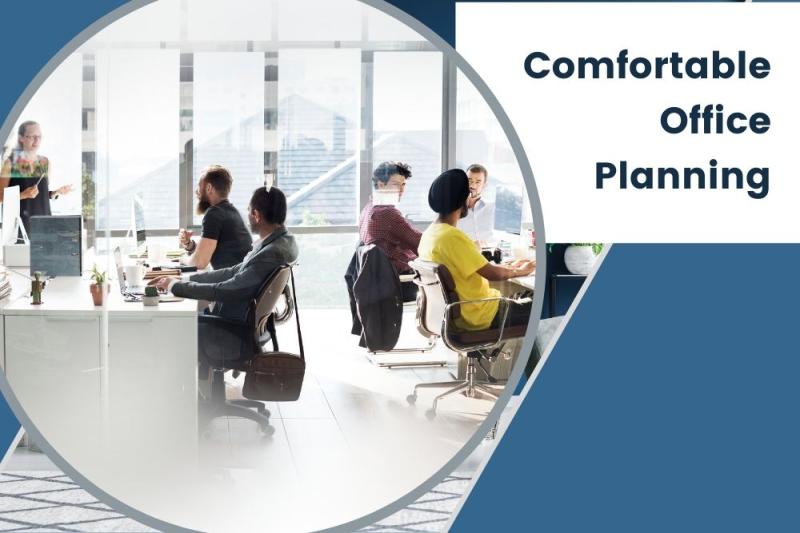
Comfortable Office Planning
When you consider everything that goes into the space and the projects and activities that take place there on a daily basis, office design becomes more complex. Understanding how the arrangement impacts employees could help you make sense of it, whether you plan to organise your cubicle at work or choose a layout for the entire office space.
Layouts
Your office layout should be chosen according to the number of employees and the space you have available. Customised layouts are the preferred option because standard layouts often don’t maximise the available space. Specialised layouts will benefit you more, especially if you are renting a space. This will help you maximise the workspace available while maintaining a personal and professional focus in your work environment.
Flow and Interaction
Segregated spaces should still allow for interaction among employees. The design should make it easy to get from one point to another and facilitate communication among different teams. The most important feature of an office is the flow between different areas. If you have a lot of rooms and no way to move from one area to another, your employees will feel trapped in their work.
Natural Light and Ventilation
Make use of available natural lighting and ventilation for an airier and more open office. For example, use windows as focal points for the design instead of covering them up. Natural light is good, especially when you want to create a more open atmosphere for your employees. It’s better to have more natural light than artificial light because it’s free from any negative effects on worker productivity.
Break Facilities
Employee relaxation areas should not be overlooked. It must house all the necessities such as a break room, lounge and a fitness room, if possible. The break room allows employees to grab a snack and recharge their batteries before heading back to work. It also gives employees an avenue for social interaction with each other and even the management, which is beneficial in terms of improving camaraderie and communication between all members of the company.
Quiet Spaces
Make use of available space in the building to create quiet areas for employees to relax. It is different from the break facilities because it has fewer distractions. An outdoor landscaped garden is one example. It is essential to provide quiet areas for your employees. It will not only help to instil a sense of productivity in your workplace, but it will also benefit your employees individually.
Office Design Trends
Design trends continue to evolve to cater to personal tastes and impact the employees and the environment. Corporate identity through design is an emerging trend. Some of today’s most popular styles are eco-friendly plans, trans-urban design, and Scandinavian-style work areas. Modern designs generally encourage open plans and custom-made interiors, with a preference for well-lit surroundings.
Different template options for office designs will help you better understand how to best set up your work area, maximising both space and employee productivity. Design trends are based on the changing needs of the workers and the current understanding of design and ergonomics.
Open Workspace and Retail Interior Design
Open workspace and retail interior design are all about creative solutions for having a more efficient and pleasant working environment. They help you to improve workflow and communication, foster collaboration, reduce loss of productivity due to distractions, and even help your employees achieve their personal best.
Commercial Spaces
Interior design is the art of harmonizing functional necessities with aesthetic preferences in a structure. Interior designers must achieve this in a way that improves the fundamental function of a building while also making it more visually appealing. Commercial areas must be efficient, cost-effective, engaging, and distinct to be effective. Your company's success is influenced by its brand, as well as the building you work from.
Space Limitations and Building Code Requirements
Interior designers must work around these limitations to make the office location flexible in terms of design. Things such as awkward corners or small windows that cannot be removed or hidden must also be considered in the design. While these may initially seem like minor issues, their inconvenience or poor taste can compound with other factors and create a vague sense of discomfort that your employees and customers may nevertheless feel.
Effects of Support Spaces in Productivity
Recreation and relaxation are often overlooked in interior office designs. However, remember that these areas allow workers to distress and refuel their energies, ultimately improving their productivity. Support spaces also often improve creativity and encourage rapport among employees.
Distractions Within a Space
Equipment noise, high foot traffic, unnecessary lights, and other distracting details disrupt concentration. Limit workplace distractions so employees can focus on their tasks and are less strained. A comfortable workspace that provides the right amount of privacy is essential to the success of any project. The wrong design choice could be distracting and cause stress among employees. This could have an impact on their work performance and overall happiness.
Function of Acoustics
Because large rooms are enclosed, chatter and other noises are often heard. Use furniture and movable walls to soften noises and reduce auditory distractions. However, in conference rooms, spaces should be designed with no barriers to sound to make it easier for everyone to listen.
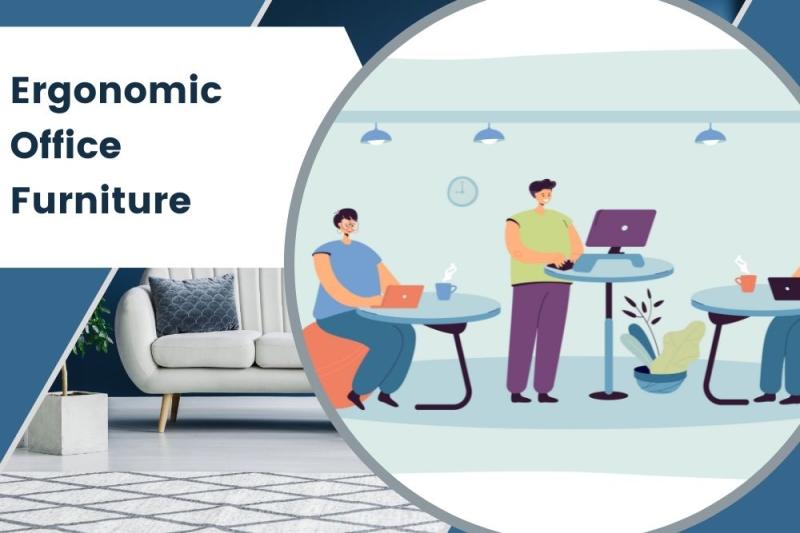
Choosing Ergonomic Office Furniture
Choosing ergonomic office furniture is an excellent way to create a pleasant working environment that allows people to focus on their work for long periods while minimizing strains and pressures. The goal of office ergonomics is to create workstations that are both comfortable and induce productivity.
Factors for Choosing Office Furniture
When selecting furniture, you must consider not only its colour and visual appeal – more importantly, they should be practical. Consider their adjustability (especially if different people will use them), whether their aesthetics blends well with the existing space and your brand identity, how easy they are to clean, their size, and of course, their cost.
Integrating Technology and Design
Modern offices must now design around electronic components to make collaborating on projects easier and to avoid hazards like fires from faulty electric circuits. Wiring must be hidden but secured, and proper ventilation and ease of cleaning must be considered to keep electronics in good condition.
What to Look for in Quality Furniture
Avoid bulky furniture that is difficult to move and clean. Modern offices should invest in multipurpose and streamlined furniture designed not only for durability but also to reduce physical stress at work. For example, choose ergonomic office chairs that support workers' backs while seated at their desks. These chairs also promote good posture and help prevent back pain, neck strain and headaches.
Desk Wire Management
Workstations should be designed to hide unsightly cables. Cables could be organised under the desk, hidden on the floor, and within walls (for mounted equipment). When you have to spend time untangling cables, it could reduce productivity. Hence, keeping cables neat and organized creates a pleasant work environment as it looks uncluttered and is even easier to clean. A well-organized desk wire management also provides a more professional impression.
Style versus Functionality
The aesthetics of any element should merge flawlessly with their function in the office space. Comfort and ergonomics must be observed for your employees’ physical well-being, but spaces must also have beauty and style to stimulate their minds.
Look through our office interior design companies to learn more about how their services can help boost company morale by creating aesthetically pleasing workspaces that improve efficiency.
Latest Becozon Offer
Boost your business with these exclusive deals by our esteemed Becozon partners

Here's How Companies Adopt
Hybrid Work Post-COVID
Looking for a CRM software?
Get customisable, cloud-based sales and operations CRM software suitable for any industry. Contact us for a demo today!
Contact Us